A platform for bigger questions.
Connected data. Deep analysis. Applications and AI. One platform.
DataWalk is a data and analytics platform built around an enterprise knowledge graph. Connect business data, follow relationships, and reuse the analysis in applications and AI.

Don't let the stack decide the question.
A relationship question can become a data project before anyone can investigate it. The answer might require another source, another identity match, another join, or a new application to put it to work.
The question should shape the analysis, but the technology usually sets the limits. Don't let it.
Less rework. More answers.
Bring sources together with shared business definitions.
Connect records belonging to the same entity.
Reuse relationships across investigations.
Run graph, relational, and search analytics together.
Ask the next question without starting over.
The platform you'd have to build.
Already built.
Building the components is one thing. Keeping them working together as your data, questions and applications change is another. DataWalk supplies the connected analytical foundation. Your team defines the business model, maps sources and configures the work that matters.
Technology fit check What data technology fits your problem? Answer four questions about your data and requirements. See which technologies are worth evaluating.
Meaning first.
Define the people, organizations, events and relationships that matter to your business. Map source data into that model. Resolve records that belong to the same entity, with evidence behind the match. A relationship can carry its own properties, such as an ownership stake and date.
- Business ontology
- Semantic ETL
- Entity resolution
- Evidence
Change the analysis. Keep the engine.
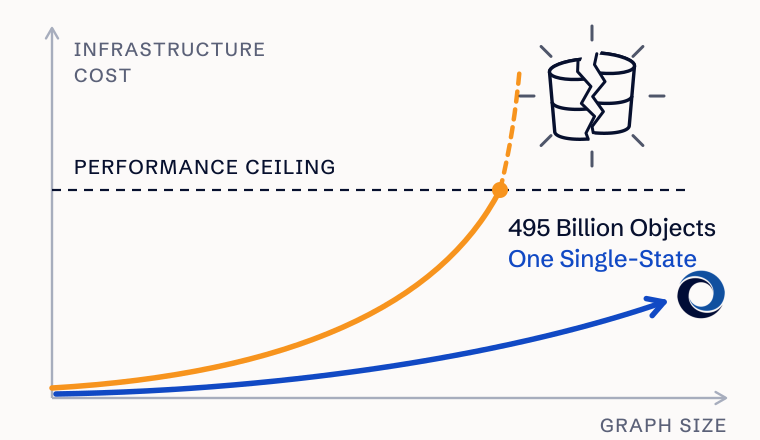
Search for a company, follow its ownership links, and narrow the results within the same analysis. Users move naturally from one question to the next, without switching tools or navigating separate systems. Search, graph and relational analysis work directly within the DataWalk database, removing the complexity of integrating and maintaining separate engines.
Less integration. Less duplication. Less complexity.
- Search
- Graph
- Relational
- One physical state
Turn an analysis into something you can reuse.
Save the steps behind an analysis so others can rerun and extend it. Configure rules, scores and alerts for recurring work. Build operational applications from connected datasets, analyses and views already in place. Your team defines the logic and its refresh processes.
- Saved analyses
- Rules and scoring
- Alerts
- Applications and APIs
Give AI the same business context as your analysts.
Connect AI assistants and agents to the same enterprise knowledge graph and ontology your analysts use. Agents can run the same analyses and get repeatable analytical results. DataWalk permissions govern which tools and data they can access.
Stop starting over.
One investigation can establish useful work for the next. The underlying relationships, analytical steps and configured definitions remain available for further questions.
-
01 · Start
Start with a search or a list of accounts.
Use the resulting set to follow owners and counterparties.
-
02 · Connect
Follow owners and counterparties.
Explore indirect connections across the graph.
-
03 · Refine
Apply conditions to select a network.
Filter and calculate to identify what warrants review.
-
04 · Reuse
Save the analytical steps.
Give the next review a foundation to extend.
What you need to know.
Find your answer
View AllWhy is DataWalk different?
DataWalk gives you search, relational, and graph analysis on the same connected data, with a much smaller footprint than you'd expect with this much analytical power. There are no separate systems to keep in sync and no integration layer to rebuild every time a source changes. The platform is simple enough for your own team to run and keep its source connections current, using the expertise you already have rather than specialist engineers.
And it isn't a tool for one use case. Once your data is connected, the next team doesn't start over. Whether it's fraud, compliance, investigations, or something no one has thought of yet, they build on the same data, models, and connections already in place. Each new use makes the platform more valuable, not more expensive to run.
Does DataWalk replace our warehouse or lakehouse?
What does the platform provide, and what do we configure?
Do saved analyses stay up to date as data changes?
Do you run a separate search engine?
Does the knowledge graph have to fit in memory?
What can an AI agent access?
Bring the question you stopped asking.
Show us the data, the connections you need to follow, and where the analysis gets difficult. See how DataWalk would approach it.