

Missed match
1 person · 2 identities
M. Rivera
not linked
Morgan Rivera
You see only part of Morgan Rivera's activity.

By Solution

A top-25 U.S. bank shatters the limitations of siloed data and delivers exceptional results.
Explore the Platform
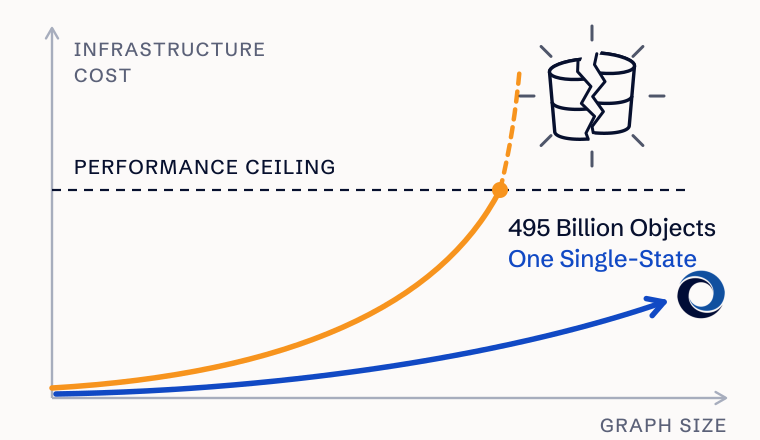
Built for petabyte-scale ambition. Proven at enterprise scale. Deploy on infrastructure you control.
All Resources
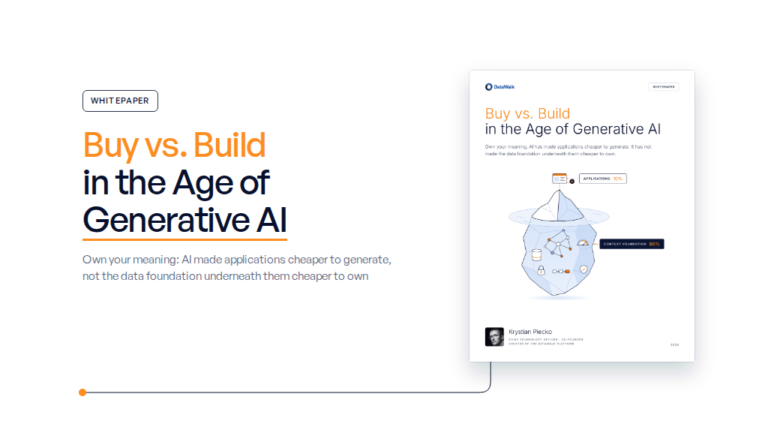
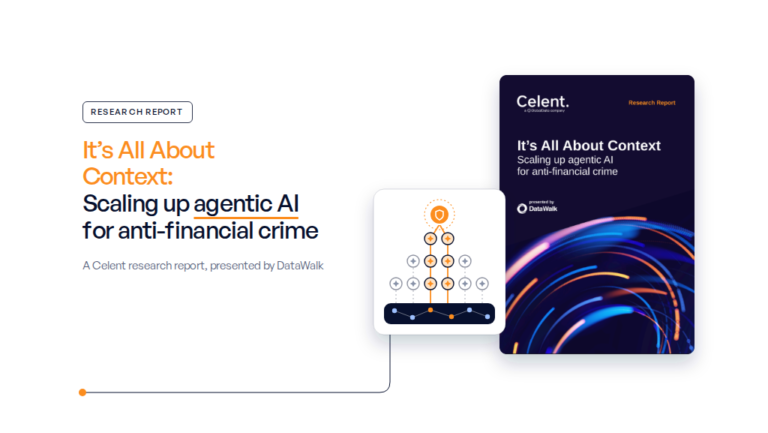
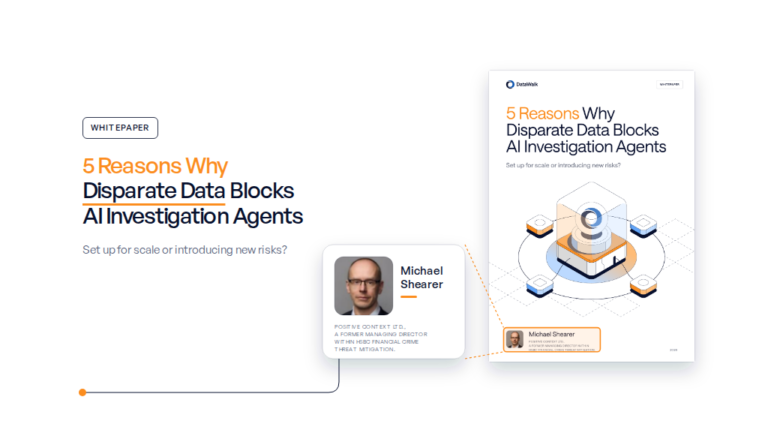
The majority of financial institutions say siloed data is holding back their fight against financial crime. Yet the appetite for agentic AI has never been higher. Will your investment in data architecture create the foundation for AI, or another layer it has to work around?
Investor Relations
Identify which records refer to the same person, organization, or other entity. See why they match, then follow their activity and relationships across sources in DataWalk's enterprise knowledge graph.
Native Entity Resolution runs within DataWalk. You can resolve records and explore the results in the same platform, without deploying or integrating a third-party matching engine.
Different systems hold different pieces of an entity's activity. Names and identifiers can vary, be missing, or be shared. That makes it hard to tell which records belong together.
You see only part of Morgan Rivera's activity.
You attribute one J. Park's activity to the other.
Names change. Addresses vary. Identifiers may be missing, inconsistent, or shared. Specialists configure matching rules and thresholds to balance the risk of missed matches and false links.
Start with a resolved identity in DataWalk's enterprise knowledge graph. Follow the transactions and relationships held in the records linked to it.
The source records retain their original attributes and relationships. Analysts can inspect them individually or explore them together.
Retain linked source records, work with resolved-entity representations, or use supported merging approaches where the application requires them. How identity is represented can be configured for the work that follows.
The evidence stays with the match.
See which records were linked and which details and rules supported the match. When records stay separate, inspect whether DataWalk compared them and what evidence kept them apart.
The same inputs and configuration produce the same verdict. Language models play no role in matching.
Build a resolved population from your records, update it as data changes, and check whether a person or organization is already known.
The same workload took 7h 03m on 3 compute nodes. Some matching work requires data to move between nodes, so adding nodes does not reduce processing time in direct proportion.
Active processing covers normalization through matching. Result import is outside the timed window.
Find your answer.
Entity resolution is the process of determining which records refer to the same real-world entity, even when names, identifiers and other attributes differ across data sources. It uses matching methods, rules and available evidence to identify records that belong together. This helps organizations establish a more consistent understanding of people, businesses and other entities across fragmented data.
A knowledge graph connects entities through their relationships and activity. When the same person or organization appears under different identities, important connections can remain fragmented. False matches can create relationships that shouldn't exist. Entity resolution helps establish which records represent the same real-world subject, improving the reliability of connected analysis.
Deduplication is a common application of entity resolution, focused on identifying duplicate records. Entity resolution also establishes identity across different sources and contexts. Once records are identified as representing the same entity, organizations can choose whether to retain them separately, connect them through identity relationships or consolidate them. Matching records and merging records are different decisions.
Not necessarily. DataWalk can represent resolved identities through relationships between source records, allowing their original attributes and connections to remain available for analysis. Whether records are consolidated, preserved or represented through resolution links depends on the implementation and configuration. Native ER links records and preserves their source attributes and relationships for analysis.
Entity resolution should be tested using representative records with known matching and non-matching outcomes. Evaluations should measure false matches, missed matches and the quality of candidate selection, rather than relying on a single accuracy figure. DataWalk can be evaluated against these requirements using customer-relevant data and matching rules.
Yes. Subsequent batch runs process new or changed records. The on-demand API checks one person or organization against the population already resolved.
Prepare and map source fields, configure matching rules, and validate the results on representative records. The quality of the source fields and mappings affects which records can be matched.
Bring representative records, difficult matches and known non-matches. Test how DataWalk establishes identity, examine the supporting evidence and explore what the results make possible for analysts working across connected data.
We use cookies on our website to give you the most relevant experience. By clicking “Allow cookies”, you consent to the use of ALL the cookies.