


MONEY, MARKETS, MURDER
An interview with DEA veteran,
David Tyree
How banks can follow the fentanyl trail and fight back
FENTANYL is not a story of street corners and small-time dealers; it is a story of scale, networks, and logistics that move across oceans and borders with chilling efficiency. The scope of the threat is now unmistakable: Drug Enforcement Administration (DEA) seizures of powdered fentanyl nearly doubled from 6,875 kilograms in 2021 to 13,176 kilograms in 2023. The agency interdicted nearly 79 million counterfeit fentanyl pills in 2023, which is more than three times the roughly 23.6 million pills confiscated in 2021. Fentanyl poisonings and law-enforcement seizures have risen steadily over the past decade, illustrating the rapid expansion and harm of the market.
Regulators have noticed. On June 20, 2024, FinCEN issued a supplemental advisory on the procurement of precursor chemicals used to synthesize illicit fentanyl and other synthetic opioids, urging financial institutions to be vigilant for suspicious activity tied to those supply chains. The advisory makes it clear that banks and compliance teams are not supporting actors in this crisis; they are part of an ensemble cast in identifying the transactional marks of a trade built to hide in plain sight.
Fentanyl Interdiction Surge
DEA Seizure Data Comparison (2021 vs. 2023)
Few people understand those networks better than David Tyree, who spent 25 years as a Special Agent with the DEA. His career took him from New Mexico to Africa, Portugal, and beyond, where he investigated transnational criminal organizations and participated in the interdiction of more than $80 million in criminal proceeds tied to drug trafficking, human trafficking, and organized crime.
Since 2004, David has been a regular facilitator/instructor for the Department of Justice’s Money Laundering and Asset Recovery Section (MLARS), the United States Attorney’s Office at the National Advocacy Center and the Drug Enforcement Administration (DEA). After retiring in 2023 as Resident Agent in Charge of the DEA in Wyoming, he moved into the private sector and helps financial institutions and law enforcement trace illicit funds.
I had the pleasure of interviewing David to discuss how fentanyl is produced, packaged, and monetized. He also discussed why its potency and production model make it distinct from past drug threats, and how banks and compliance teams can spot illicit transactions hiding in plain sight. Even after knowing David for many years, I was on the edge of my seat — his answers were part strategic briefing, part riveting storytelling. With personal examples, he makes clear why stronger public–private collaboration is essential to disrupting a network that now operates at national scale.
A conversation with David Tyree
Q: What makes fentanyl fundamentally different from other narcotics threats that banks see?
Legal fentanyl is a powerful opioid used under medical supervision with tight controls, typically as a patch, a nasal spray or an IV. The illicit drug, however, bears little resemblance to its clinical counterpart. In hospitals, patients are closely monitored and often given oxygen, because opioids slow the heart; on the street there are no safeguards.
What makes the illicit version different is the lack of oversight and the way it’s produced. There’s no pharmacy behind illicit fentanyl. Criminal organizations, traditionally from China, buy precursor chemicals. They take those precursors, create powder, and then either press that powder into pills or ship it across the U.S. border as powder to be pressed into counterfeit pills that flood the street.
The pill form is deceptive. Most drug users who are taking fentanyl believe it is either oxycodone, Vicodin, or some other opiate-derivative pill. The fact that it’s pressed leads a consumer to believe that there’s oversight by a regulatory agency. It’s like buying a bottle of wine; you assume that the contents have been checked and were not filled with 90% rubbing alcohol. With illicit fentanyl, there are no standards.
This lack of oversight creates deadly variability in potency. An addict might take the first fentanyl pill and not feel the high they expect. The next pill may be 100% fentanyl because adulterants were not mixed into it, and the addict’s heart stops immediately. This does not happen in a vacuum; families that were already struggling with a loved one’s addiction are now facing loss.
This danger extends beyond intentional users. Cartels are poly-drug traffickers and can be packaging fentanyl, heroin, methamphetamine, and marijuana all in the same room, without any quality control. Fentanyl powder often gets cross-contaminated into marijuana. Someone who thinks they are buying only marijuana can ingest fentanyl unintentionally and die. Fentanyl’s potency far exceeds heroin’s, which is why the DEA’s "One Pill Can Kill"3 warning resonated.
Lethality Comparison
Potency of Illicit Synthetic Opioids
One Pill Can Kill
Counterfeit pills lack medical standards. A single pill may contain a lethal dose (2mg) while another contains none, creating a "Russian Roulette" for users.
Contamination Risk
Due to shared packaging environments, fentanyl is frequently found in non-opioid drugs like marijuana or meth, leading to unintentional poisonings.
Some seized loads have even been found with Narcan mixed into the pills, showing us that cartels recognize they need to take steps to keep their customer base alive.
An even greater risk is carfentanil, which is 100 times more potent than fentanyl. Think about what happens if carfentanil is crushed into something as ordinary as baby powder and released into a crowd. The potency is enough to stop hearts instantly. These are concerns that we all have to be really thoughtful about and be proactive, not responsive.
Q: How do cartels use fentanyl profits, and what does that business model look like?
The money from fentanyl trafficking seems to be ending up with the cartels down in Central and South America, and ultimately in China as well. In some communities where they operate, cartels are not always seen as destructive. They use their money strategically to buy political influence and local legitimacy, much as Al Capone did in his day.
Although Capone was laundering money from prohibition and narcotics, he also created soup kitchens before the government did. By delivering services or aid, cartels purchase goodwill and protection, making it harder for governments to dislodge them.
Q: Why have money, influence or power?
Ultimately, it’s to have impact. At the same time, cartels are warring for American customers. The damage runs deeper than overdoses: narcotics erode social fabric, hollow out communities, and can leave many young, military-age men disengaged. These tactics for destabilizing societies trace back as far as the opium wars.
From a financial perspective, we’re living in a different time. Pre-crypto, in the narcotics trafficking world, cash was king. But today cartels are not just moving bulk cash across borders — they are also layering in new methods, like digital currency and shell companies, on top of the traditional cash-smuggling model. The business model is adaptive, opportunistic, and focused on one thing: sustaining influence through money.
Q: How do traffickers move their money and what are some red flags that point to fentanyl trafficking?
The profits from fentanyl follow two tracks: the small-scale addict-level transactions and the larger cartel laundering operations. On the street level, cash is used, but traffickers also exploit crypto. For example, an addict might go to a Bitcoin ATM — first withdrawing fiat currency from a DDA [demand deposit account], then load that cash onto the blockchain. At 75 cents to three dollars a pill, they can send the money to another wallet and later receive the pills either in the mail or through a street delivery.
"Fentanyl isn’t a street-corner problem — it’s a global business built on scale, logistics, and money."
At that micro level, this isn’t technically money laundering — yet. If someone moves money from a DDA onto a peer-to-peer money transfer service to buy narcotics, they’re not concealing the source or nature of the funds. They are just obfuscating it. The laundering happens further up the chain, when those small flows are aggregated, funneled into domestic accounts, and placed through businesses that act as fronts.
Red flags to watch for include retail obfuscation patterns. Are there crypto loadups from the same accounts or customers? What about rapid transfers from DDAs to wallets or peer-to-peer services?
Another red flag is funds moving into accounts held by LLCs in industries that do not align with that kind of money movement. Look for round, unexplained transactions — for example, a $1,400 payment claimed to be for a couch but has no corroborating marketplace listing. Or, cover stories about yard sales that don’t appear anywhere online. The bad actors are trained to create stories to account for a source of funds, and banks need to test those stories.
Also look at deposit patterns. Are there frequent small cash deposits structured to avoid reporting thresholds? Are there multiple cash deposits from different individuals tied to the same beneficiary or business?
Another red flag is merchant activity that does not align with claimed business operations, and there are no tax filings or online presence.
Banks can also find red flags if they pay attention to travel patterns. These typologies include trips to known drug hubs, multiple simultaneous hotel room rentals, or deposits appearing across several states at once. If you see the same dollar amounts leave one account and show up in another account around the same time, that pattern is highly suspicious.
Law enforcement evidence can be gold when shared with banks: phone numbers, peer-to-peer wallet addresses, or account identifiers recovered at a seizure. Let me just interject here — a bank’s relationship with local law enforcement is critical.
In practice, when a bank alerts law enforcement directly at the time they file a suspicious-activity report [SAR], that SAR will typically move up on investigators’ priority lists. In 2024, there were roughly 1,200 fentanyl-related SARs totaling about 1.4 billion dollars. That’s a big number. If banks want to move fast against traffickers, they need two things: solid local law-enforcement relationships and the initiative to pick up the phone and call law enforcement rather than wait for law enforcement to call after receiving a SAR. The SARs that receive priority review are typically those for which law enforcement has already been notified.
Q: What kinds of training and awareness are most effective for financial institutions trying to detect fentanyl trafficking and related crimes?
The best training I’ve seen is experiential. One of the most requested exercises I do is called banker to bad guy, bad guy to banker. It forces participants to step into the shoes of the trafficker. If you were trying to move bulk narcotics proceeds into a financial institution, how would you do it without attracting attention? What kind of cover story would you create? How would you disguise the deposits? That shift in mindset opens people’s eyes to red flags they might otherwise overlook.
- Retail Obfuscation: Rapid transfers from DDAs to crypto wallets or P2P services.
- Unaligned LLCs: Funds moving into shell companies with no tax filings or web presence.
- Travel Typologies: Simultaneous hotel rentals or deposits across several states.
- Round Transactions: Payments (e.g., $1,400) for items without marketplace listings.
Reasoning: The reported $1.4B in SARs likely represents a fraction of total flows. Criminal organizations use smurfing and structuring below reporting thresholds ($5k–$10k) to avoid detection, suggesting actual transaction volumes are significantly higher.
Direct communication with law enforcement at the time of SAR filing significantly increases prioritization by investigators.
Quick action checklist — How to close the SAR feedback loop
- File the SAR (well-documented). Write a clear, concise narrative that explains why the activity is suspicious.
- Send a one-line alert to law enforcement. Email the relevant tip line with the SAR’s BSA ID so investigators can triage it faster.
- Attach supporting evidence. Include comma-separated values (CSV) extracts, screenshots, images (e.g., bulk cash photos), merchant data and any open-source corroboration.
- Preserve records — and understand keep-open letters vs. subpoenas. If investigators ask you to preserve an account, request a written keep-open letter; if they need records, require a legal subpoena and notify your legal team.
- Expect and request specificity. Encourage targeted requests (date ranges, fields, transaction types) rather than vague "any and all" demands.
- Use client outreach carefully. Preserve call recordings and outreach notes — they can be corroborating or exculpatory.
- Close the feedback loop. Ask detectives or Assistant United States Attorneys what indicators they’re seeing so you can refine alerts and typologies.
- Suspected national-security link? If transactions plausibly suggest a terrorism link, notify legal and senior management and escalate to national security channels (for example, the FBI Joint Terrorism Task Force).
- Build relationships pre-crisis. Host lunch-and-learns, establish local agent contacts, and share what your FIU can provide so escalation is fast when a case emerges.
I’ve watched this play out with human trafficking cases. Many of them started with banks filing SARs because they noticed money movement consistent with prostitution or pandering. In one case, a simple phone number was the clue. Analysts dropped the phone number from an account into an open-source search and immediately found illicit ads. That kind of awareness came directly from the financial institution team that was studying typologies, not from law enforcement.
Education doesn’t have to be complicated. I often use pictures, such as photos of bulk cash seizures, and ask, how would you get this into your institution without triggering a CTR [cash transaction report]? When traffickers use smurfs,4 how do they pay them? What story do they tell to explain the source of funds? Are they generating fake posters for concerts that never happened, or invoices for motorcycles that were never sold? These details matter because they reflect how the bad actors think.
I also remind people that traffickers adapt constantly. I worked undercover with a motorcycle gang, and when I asked how they got money into banks, the dealer told me directly — he brought deposits under $5,000, showed invoices for motorcycles he never owned, and made it look legitimate. If you don’t know that’s a tactic, you won’t see it when it appears in your institution’s records.
Even something as simple as travel patterns can be a clue. If a customer is traveling repeatedly to Humboldt County and renting multiple hotel rooms, that should raise questions. In law enforcement, we knew one room was for receiving narcotics, the other for packaging. If money orders are being deposited in another state at the same time, the pattern becomes clear. Training analysts to think like this equips them to spot anomalies without waiting for someone else to tell them what’s suspicious.
The goal isn’t to turn bankers into cops. It’s to equip them with the same critical lens. What makes the difference is the mindset shift: instead of seeing compliance as a checklist, analysts start to see themselves as participants in saving lives. And that’s the kind of awareness that changes how institutions engage with these threats.
Q: How can banks and law enforcement build effective partnerships?
Banks and law enforcement operate in different cultures with different incentives. Police are motivated by power, achievement, and association; they have badges, uniforms, and challenge coins.5 Financial institutions are driven by safety, soundness, and compliance. They don’t see themselves as part of the same mission. But the truth is, both sides are serving the community. The more they acknowledge and respect those differences while still working together, the more effective they become.
Building those partnerships starts locally. I’ve worked with banks that hosted lunch-and-learns with their regional law enforcement. The bankers walked through what an investigation looks like on their side — customer outreach, enhanced due diligence, transaction monitoring — while the agents explained what happens after a seizure or arrest. That kind of transparency helps each side understand what the other can and cannot do.
When we took this further, for example in Portland and Wyoming, we didn’t just trade knowledge; we built networks. In Wyoming, after a joint effort, 36 banks ended up on a group text chain. If something strange happened in Cheyenne, everyone knew about it instantly, from Laramie to Casper. That real-time visibility is invaluable when traffickers are moving quickly.
Some of my best experiences were when banks didn’t just file a SAR, but they reached out, asked questions, or provided supporting documents I hadn’t even thought to request. They were the eyes on the street for me. And in return, I sat down with their teams to explain what the money movement looked like in a live case, or how traffickers in a motorcycle gang disguised their cash deposits. That exchange educated everyone.
One case comes to mind that illustrates that point. One of my strongest partnerships began with a SAR on a residential-concrete business that didn’t fit industry norms. The FIU [Financial Intelligence Unit] had flagged unusually large cash flows. I remember thinking, what do I know about residential concrete? But I went to the FIU anyway and asked them to include whatever supporting documents they had — images, CSV extracts, merchant records, etc. Even though I had a badge and wasn’t sure how much the industry would want to talk to me, those records let me do field interviews and industry checks. The documents turned opaque activity into a testable hypothesis and made the investigation far more productive. It wasn’t automatic — I had to ask — but when bankers, prosecutors and agents sit in the same room and compare notes, real progress follows. We used that approach in Portland and Wyoming and built networks that led to actionable leads.
"This isn’t about compliance metrics or arrest statistics — it’s about saving lives."
At the end of the day, none of us can afford to be purely reactive. Narcotics trafficking, especially with fentanyl, moves too fast and kills too many. The only way to disrupt it is for financial institutions and law enforcement to stop working in parallel silos and start working as partners to share information, close the feedback loop, and build trust before a crisis hits. If we don’t, we’ll keep getting the same unacceptable results. If we do, we can actually save lives.
Q: David, you mentioned the lack of a feedback loop. How can banks and law enforcement close the SAR feedback loop?
The gap is simple to describe and painfully easy to see: banks file suspicious-activity reports and rarely hear back, and investigators too often respond with vague, "any and all" subpoenas that add little value. Both sides end up checking boxes instead of working together, and that turns SARs into paperwork instead of intelligence.
There are straightforward, practical fixes that change that dynamic. First, when you file a SAR, send a one-line alert to the appropriate federal tip line or local investigator with the SAR’s Bank Secrecy Act identification (BSA ID) and a single-sentence summary. For example, "BSAID 123 — apparent narcotics-related peer-to-peer activity". That tiny step helps investigators triage and prioritize filings. Imagine if financial crimes teams could show regulators not only the SARs but also that they sent a quick notice to FBI.gov, DEA.gov, IRS.gov, or another tip line — just pointing to the BSA ID number. That step would make a difference.
I sat on SAR review teams across the country, sometimes with a thousand SARs to evaluate every month. Do you know which ones rise to the top? The ones where law enforcement had already been notified. That simple connection changes how SARs are prioritized.
Second, make it easy for investigators to share what they find on seizures. When they recover phones or devices, the financial leads on them such as phone numbers, DDA identifiers and peer-to-peer addresses should be emailed to the bank so the FIU can run focused checks. Even a quick note like "we found these two phone numbers on scene" can produce immediate value.
Third, push for specificity in record requests. Targeted asks — a date range, particular fields, or specific transaction types — yield usable data much faster than blanket "any and all" demands. And when investigators ask you to preserve an account, request a written keep-open letter; a preservation request does not replace the need for a subpoena when records must be produced.
Make SARs more useful from the start by attaching supporting evidence: CSV extracts, screenshots, merchant data and photos of bulk-cash seizures let investigators see patterns at a glance. Preserve client outreach notes and recorded calls too. Those can be corroborative or exculpatory and are often crucial to an investigation.
Finally, close the loop. If investigators act on your tip, ask for feedback. What indicators rose to the top? What proved helpful in their affidavit? This intelligence lets you refine alerts and typologies so the next SAR is sharper.
None of this is expensive or dramatic. A one-line email, timely sharing of identifiers, a written keep-open request, and a habit of follow-up: those small, repeatable steps turn SARs into investigations, and investigations into prosecutions. That two-way flow is the single most practical way banks can help stop fentanyl at scale.
Q: You’ve described the mechanics of fentanyl trafficking and the importance of partnerships. Stepping back, what drives your sense of urgency around this issue?
It always comes back to people. Every overdose isn’t just an isolated event — it’s a family member, a community member, someone with connections and people left behind. Just last Father’s Day, a colleague had three overdose death calls. That’s devastating for the families and for the responders themselves. We can do better.
If we keep waiting for subpoenas or overdoses, nothing changes; getting banks and police in the same room and focusing on saving lives breaks down the cultural barriers that block action.
I also think about the bigger picture. Cartels aren’t just selling drugs, they’re waging war for influence and culture. And here at home, we’re also fighting nihilism. I’ve been briefed on youth movements literally called "No Lives Matter." There’s a deep sense of hopelessness feeding into addiction and violence. To counter this threat we must rebuild the shared conviction that life matters.
That’s why I talk about small moves. Every partnership we build, every SAR we file, and every banker who spots a red flag is a small move that accumulates. Hope, to me, isn’t passive optimism — it’s what Nick Cave called a warrior’s mindset.6 It takes courage and discipline to stand against cynicism. It means choosing not to be resigned, not to be resentful, even when the system feels frustrating.
I’ve learned to say, I’m enough. When a late-night call comes, when a request feels overwhelming, that reminder keeps me from spiraling into insecurity or burnout. And I tell bankers the same thing. You are enough. Your role matters. What you do has impact.
At the end of the day, this isn’t about compliance metrics or arrest statistics. It’s about saving lives. If a single SAR, a single phone call, or a single conversation between a bank and law enforcement prevents one death, that is the mission fulfilled. That’s why I stay passionate about this work. It’s not glamorous, but it’s meaningful. And the results — when we get them — are worth everything.
Endnotes
- https://www.dea.gov/sites/default/files/2024-05/NDTA_2024.pdf
- https://www.fincen.gov/system/files/advisory/2024-06-20/FinCEN-Supplemental-Advisory-on-Fentanyl-508C.pdf
- https://www.dea.gov/onepill
- The federal crime of structuring, or "smurfing," involves breaking large transactions into smaller ones to evade reporting requirements. Structuring is illegal under 31 U.S.C. § 5324
- https://www.usamm.com/blogs/news/challenge-coins-and-why-military-uses-them
- https://kottke.org/24/08/hopefulness-is-the-warrior-emotion

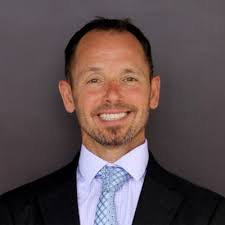
David Tyree is a retired DEA Special Agent who served for 25 years, investigating transnational criminal organizations across New Mexico, Africa, Portugal, and beyond, and participated in the interdiction of over $80 million in criminal proceeds.
ContactJoin the next generation of data-driven investigations:
Discover how your team can turn complexity into clarity fast.

Solutions
Product
Partners
Company
Resources
Quick Links